Why Insurance Won’t Pay Medical Bills After Your Car Accident
You did everything right after the car accident. You went to the emergency room. You followed up with your doctor. You filed your insurance claims. And now you’re stuck with medical bills that nobody seems willing to pay.
Your health insurance says the accident isn’t their responsibility. The at-fault driver’s insurance company says they’ll only pay once your case settles, which could be months or years away. Your own auto insurance either doesn’t cover medical bills or has already run out. Meanwhile, the bills keep coming, collection notices are piling up, and you’re wondering how you’re supposed to pay for treatment you need while also keeping up with rent, groceries, and everything else.
If you’re asking yourself “why won’t insurance pay my medical bills after this accident,” you’re not alone. This situation is more common than you might think, and it’s not your fault. Insurance companies (both health and auto) have reasons and sometimes excuses for denying or delaying payment on accident-related medical bills. Understanding why insurance won’t pay medical bills after a car accident is the first step toward getting the treatment you need and the compensation you deserve.

Which Insurance Company Is Refusing to Pay Your Medical Bills?
This might seem like a simple question, but the answer matters because different insurance companies deny claims for different reasons:
Your health insurance might be refusing because they consider this an auto accident, which they believe should be covered by auto insurance instead.
The at-fault driver’s auto insurance is likely refusing to pay anything until your case is completely settled, which means you could wait months or even years for reimbursement.
Your own auto insurance might not include medical payment coverage, or you may have already exhausted the limited amount available.
Understanding which insurance is refusing to pay and why helps you figure out your next steps. Let’s break down each scenario.
When Your Health Insurance Won’t Pay Medical Bills After a Car Accident
One of the most frustrating situations is when your own health insurance refuses to cover treatment for injuries from a car accident. You pay premiums every month specifically so you’ll have coverage when you need medical care. But after an accident, many health insurance companies deny claims or refuse to process bills related to the crash.
The “Auto Accident Exclusion” Problem
Most health insurance policies contain language about auto accidents. Some policies explicitly exclude coverage for injuries sustained in car accidents. Others include what’s called a “coordination of benefits” clause, which means your health insurance will only pay after all auto insurance coverage has been exhausted.
When you file a claim for accident-related treatment, your health insurance company reviews the circumstances. If they determine the injuries came from a car accident, they may deny the claim outright or place it on hold while they investigate whether auto insurance should pay instead.
Why Health Insurance Companies Deny Car Accident Medical Bills
Health insurance companies deny accident-related claims for several reasons:
They believe auto insurance should be primary. In Georgia, if you’re injured in a car accident, the at-fault driver’s liability insurance is typically responsible for your medical bills. Your health insurance company knows this, and they don’t want to pay for something they believe someone else owes.
They’re protecting their subrogation rights. If your health insurance does pay your medical bills, they may have the right to be reimbursed from any settlement you receive from the at-fault driver. Some insurance companies would rather avoid paying upfront and then fighting for reimbursement later.
They’re questioning whether treatment is accident-related. If you had any pre-existing conditions or if there’s a gap between the accident and when you sought treatment, your health insurance might deny claims by arguing the treatment isn’t actually related to the crash.
What Happens When Health Insurance Refuses Your Accident Claims
When your health insurance won’t pay medical bills after a car accident, you’re left in a difficult position. Doctors and hospitals still expect payment. If you can’t pay out of pocket, you have limited options. Some medical providers will agree to treat you under a medical lien, which means they’ll wait to be paid from your eventual settlement. Others won’t treat you at all without payment upfront or insurance coverage.
This is where many people realize they need legal help. A car accident lawyer can work with medical providers to arrange treatment under liens, negotiate with health insurance companies to process claims properly, and ensure all medical bills are included in your injury claim against the at-fault driver.
When Auto Insurance Won’t Pay Your Medical Bills After a Car Accident
The other common scenario is when auto insurance refuses to cover your medical bills. This can happen with the at-fault driver’s insurance, your own auto insurance, or both. Understanding why auto insurance won’t pay medical bills after your car accident helps you figure out what to do next.
Understanding Why the At-Fault Driver’s Insurance Won’t Pay Yet
If another driver caused your accident, their liability insurance is legally responsible for your damages, including medical bills. But here’s the catch: liability insurance companies almost never pay medical bills as they come in. Instead, they wait until your case is completely settled or a court orders them to pay.
This means if you’re injured in January and your case doesn’t settle until December, you could be waiting nearly a year for the at-fault driver’s insurance to pay anything toward your medical treatment. During that time, doctors still expect payment. Hospitals send bills to collections. Your credit score suffers.
The insurance company isn’t necessarily breaking any rules by refusing to pay during your treatment. They want to see the full extent of your injuries and the total cost of your medical care before they write any checks. They also know that once they start paying bills, they lose leverage in settlement negotiations.
When Your Own Auto Insurance Won’t Cover Medical Bills
Many people assume their own auto insurance will cover their medical bills after any accident, but that’s not always true. Whether your own insurance pays depends on what coverage you purchased.
Personal Injury Protection (PIP) covers your medical bills regardless of who caused the accident, but Georgia doesn’t require drivers to carry PIP coverage. If you didn’t add it to your policy, you don’t have it.
Medical Payments Coverage (MedPay) also covers accident-related medical bills regardless of fault, but again, it’s optional in Georgia. Many people skip this coverage to save money on premiums.
If you don’t have PIP or MedPay, your own auto insurance won’t pay any of your medical bills. Even if the other driver was completely at fault, your insurance company has no obligation to cover your treatment costs.
PIP and MedPay: Why These Benefits Run Out or Don’t Apply
Even if you do have PIP or MedPay coverage, these benefits have limits. PIP typically maxes out at $2,500 to $25,000 depending on your policy. MedPay limits are often even lower, sometimes just $1,000 or $5,000.
If your injuries are serious, you can exhaust these benefits quickly. A single emergency room visit can cost $10,000 or more. Surgery, physical therapy, and follow-up care add up fast. Once your PIP or MedPay is gone, you’re back to the same problem: no insurance willing to pay your ongoing medical bills while you wait for your case to settle.
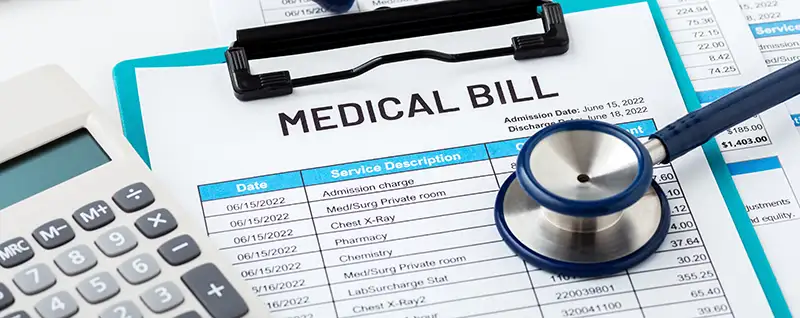
Common Reasons Insurance Companies Refuse to Pay Medical Bills
Beyond the basic structure of how health and auto insurance work, insurance companies use specific reasons to deny or delay payment on your medical bills. Understanding these tactics helps you protect yourself and build a stronger case for compensation.
Disputes Over “Reasonable and Necessary” Treatment
Insurance companies love this phrase. They’ll argue that certain treatments weren’t “reasonable and necessary” for your injuries, which gives them an excuse not to pay.
Maybe your doctor recommended physical therapy three times a week, but the insurance company thinks twice a week is sufficient. Maybe you needed an MRI to diagnose your injury, but the insurance adjuster questions whether imaging was truly necessary. Maybe your doctor prescribed pain medication, but the insurance company thinks over-the-counter options should have been tried first.
These disputes aren’t really about your medical care. They’re about the insurance company trying to reduce how much they have to pay. When they refuse to cover certain treatments, they’re betting you’ll either pay out of pocket or skip the treatment entirely. Either way, they save money.
Pre-Existing Condition Claims
If you had any prior injuries or medical conditions before your car accident, insurance companies will try to blame your current problems on those pre-existing issues rather than the crash.
Had lower back pain before? The insurance company will argue your current back injury is just a flare-up of your old condition, not a new injury from the accident. Previous neck problems? They’ll claim the accident didn’t cause any new damage. Even conditions that seem completely unrelated can be twisted into reasons to deny your claim.
The truth is that a car accident can aggravate pre-existing conditions or cause new injuries on top of old ones. You’re entitled to compensation for how the accident worsened your health, even if you weren’t in perfect condition before the crash. But insurance companies will use any pre-existing condition as ammunition to deny or reduce payment.
Gaps in Treatment or Documentation Issues
Insurance companies scrutinize your medical records looking for reasons to deny claims. They pay special attention to gaps in treatment and documentation problems.
If you didn’t see a doctor immediately after the accident, they’ll question whether you were really injured. If you missed follow-up appointments or stopped treatment for a while, they’ll argue you must have recovered. If your medical records don’t clearly connect your current symptoms to the accident, they’ll claim the injuries aren’t related.
Sometimes these gaps happen for legitimate reasons. You couldn’t afford to keep going to the doctor. You had to go back to work and couldn’t take time off for appointments. You thought you were getting better and didn’t realize you needed ongoing care. Insurance companies don’t care about these explanations. They just see an opportunity to pay less or nothing at all.
What You Can Do When Insurance Won’t Pay Medical Bills After Your Accident
Being stuck with unpaid medical bills while insurance companies refuse to help is overwhelming, but you have options. Here’s what you can do to get the treatment you need and protect your right to compensation.
Medical Liens: Getting Treatment Now, Payment Later
A medical lien is an agreement between you and your medical provider. The doctor or hospital agrees to treat you now and wait to be paid from your settlement later. This arrangement allows you to receive necessary medical care even when no insurance company is willing to pay your bills upfront.
Medical liens are common in personal injury cases. Many doctors who treat accident victims are familiar with this arrangement and willing to work under a lien. When your case eventually settles, your attorney negotiates with the medical providers to reduce what they’re owed, then pays them from the settlement proceeds before you receive your share.
This isn’t a perfect solution because you’ll still owe the money eventually, but it solves the immediate problem of getting treatment when you need it. Without a lien arrangement, many injured people would have no way to see a doctor or continue necessary care.
Negotiating with Medical Providers While Your Case Proceeds
Not all medical providers will agree to liens, but many are willing to work with you in other ways. Some will set up payment plans with small monthly amounts. Others will agree to hold off on collections while your case is pending. Hospitals sometimes have financial assistance programs for people without insurance or ability to pay.
The key is communication. Don’t ignore medical bills or collection notices. Contact the billing department, explain your situation, and ask about options. Many providers would rather work with you than send your account to collections or write it off as bad debt.
A car accident lawyer can also help with these conversations. Medical providers are often more willing to be flexible when they know an attorney is involved and a settlement is coming.
Why Insurance Companies Won’t Pay Until Your Case Settles
At-fault insurance companies refuse to pay medical bills during treatment because waiting gives them leverage. They know you’re under financial pressure. They know the bills are piling up. They’re counting on you getting desperate enough to accept a low settlement offer just to make the pressure stop.
Once you settle your case, you cannot come back later asking for more money. If your medical treatment ends up costing more than you thought, or if you need surgery down the road, that’s your problem once the settlement is signed. Insurance companies know this, so they delay payment and push for quick settlements before you understand the full extent of your injuries and expenses.
This is exactly why many people need legal representation. A lawyer protects you from accepting too little too soon and makes sure all your medical bills (past and future) are accounted for in any settlement.
How a Car Accident Lawyer Helps When Insurance Won’t Pay
When insurance companies refuse to pay your medical bills, trying to handle everything yourself puts you at a serious disadvantage. Insurance adjusters are trained negotiators who deal with injury claims every day. They know exactly how to minimize what they pay, and they’re very good at it.
We Deal with Insurance Companies So You Can Focus on Recovery
At Hodgins & Kiber, we take over all communication with insurance companies once you hire us. That means you don’t have to argue with adjusters, explain your injuries over and over, or worry about saying something that hurts your case.
We handle the phone calls, the paperwork, the back-and-forth negotiations. We know the tactics insurance companies use to deny or delay payment, and we know how to counter them. While we’re fighting with the insurance companies, you can focus on what actually matters: getting better.
We also work directly with your medical providers. We arrange treatment under liens when necessary, negotiate bills to reduce what you owe, and make sure every provider gets paid from your settlement. You shouldn’t have to coordinate all of this while you’re injured and dealing with pain.
Protecting Your Rights When Medical Bills Pile Up
Insurance companies count on injured people not knowing their rights. They offer settlements that don’t cover future medical needs. They pressure you to accept payment before you’ve finished treatment. They use your pre-existing conditions against you. They claim your treatment wasn’t necessary.
We protect you from these tactics. We document every injury, every medical expense, every day of work you missed. We gather evidence that proves the accident caused your injuries and that your treatment was necessary. We calculate what you’re truly owed, including future medical costs, not just what the insurance company wants to pay.
We also make sure you don’t miss critical deadlines. Georgia law gives you a limited time to file a personal injury claim. If that deadline passes, you lose your right to compensation entirely. We handle the legal timeline so you don’t have to worry about running out of time while you’re trying to recover.
Our attorneys have tried numerous cases to verdict throughout Georgia. Insurance companies know we’re willing to take cases to trial if they won’t offer fair compensation. That willingness to fight in court often leads to better settlement offers because insurers know we’re not bluffing.
Get Help When Your Insurance Won’t Pay Medical Bills
If insurance won’t pay your medical bills after a car accident, you don’t have to face this situation alone. The stress of unpaid bills, collection notices, and insurance companies giving you the runaround only makes your recovery harder.
Your consultation is completely free, and you pay nothing unless we win your case. If you need transportation to our office, just let us know and we’ll arrange it. Call us today at (404) 975-1467 to schedule your free consultation, or submit a contact form and we’ll reach out to you.
You don’t have to figure this out on your own. Let us handle the insurance companies while you focus on getting better.