

Understanding Your Georgia Police Accident Report
After a car accident, your Georgia police accident report can provide important details about how the collision occurred and may become a valuable piece of evidence in your insurance claim or personal injury case. However, these reports often contain unfamiliar abbreviations, codes, diagrams, and legal terminology that can make them difficult to understand.
At Hodgins & Kiber, LLC, we help injured accident victims throughout Georgia understand the details of their police reports, identify important evidence, and take the necessary steps to protect their rights. Knowing how to read your accident report can help you better understand your claim and recognize information that may impact your ability to recover compensation.
What Is a Georgia Police Accident Report?
A Georgia police accident report is an official document completed by the law enforcement officer who investigates a motor vehicle collision. The report provides a summary of the accident based on the officer’s observations, statements from drivers and witnesses, physical evidence, and information collected at the scene.
While a police report can be an important resource, it does not automatically determine who is legally responsible for the accident. Insurance companies, attorneys, and courts consider the report along with other evidence when evaluating fault and damages.
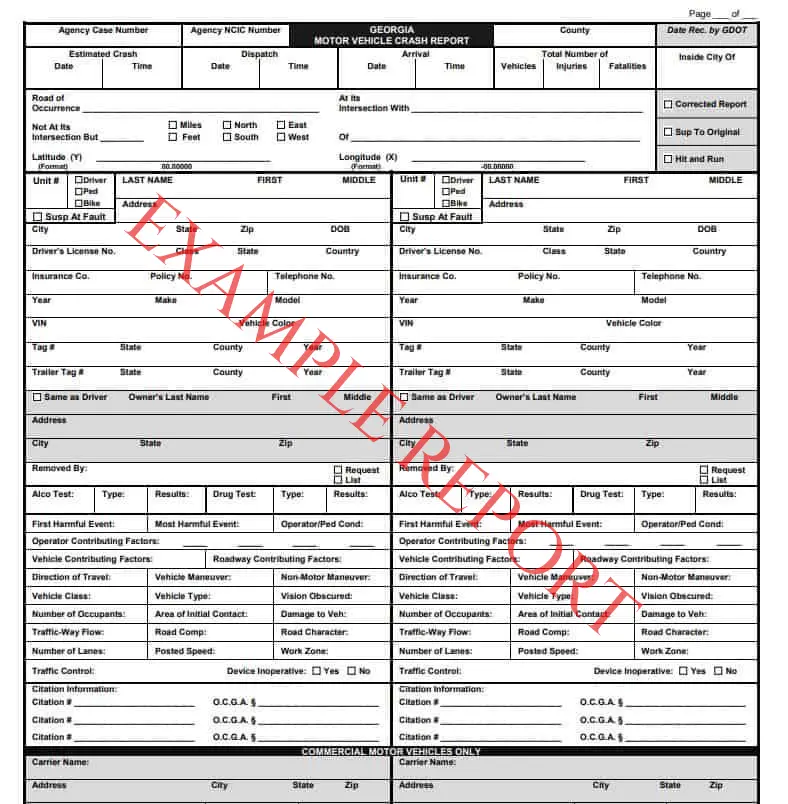
Key Sections of a Georgia Police Accident Report
Basic Accident Information
The beginning of the report typically includes general information about the collision, such as:
- Date and time of the accident
- Location of the crash
- County and roadway information
- Accident report number
- Investigating law enforcement agency
- Officer’s name and identification information
Review this section carefully to make sure the basic details of your accident are accurate.
Driver Information
The police report will generally include information about each driver involved in the collision, including:
- Name and address
- Driver’s license information
- Insurance information
- Vehicle owner information, if different from the driver
Make sure your personal information is correct, as even minor errors can create confusion during the claims process.
Vehicle Information
Each vehicle involved in the accident will have a separate section detailing information such as:
- Year, make, and model
- License plate number
- Vehicle Identification Number (VIN)
- Registration details
- Vehicle damage description
- Towing information
This information helps document the vehicles involved and the severity of the impact.
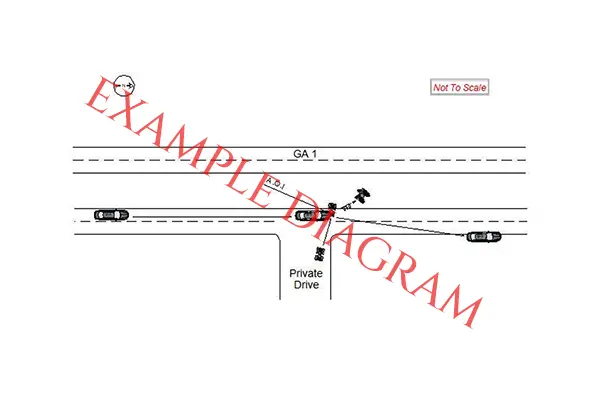
Accident Diagram
Many Georgia accident reports include a diagram showing how the collision occurred. This illustration can help explain the officer’s understanding of the crash.
The diagram may include:
- Vehicle positions before and after impact
- Direction of travel
- Lane markings
- Traffic signs or signals
- Point of impact
- Roadway layout
While accident diagrams can be helpful, they may not always capture every detail or accurately represent all circumstances surrounding the crash.
Officer’s Narrative
The officer’s narrative is one of the most important sections of a Georgia police accident report. This written summary explains the officer’s observations and may include:
- Statements from drivers involved
- Witness accounts
- Physical evidence found at the scene
- Road and weather conditions
- The officer’s conclusions
- Whether citations were issued
The narrative can provide insight into how the investigating officer interpreted the accident, but it should be reviewed along with all other available evidence.
Contributing Factors
Police reports may identify factors that potentially contributed to the accident, including:
- Speeding
- Following too closely
- Failure to yield
- Distracted driving
- Improper lane changes
- Running a traffic signal or stop sign
- Impaired driving
- Unsafe road conditions
These factors may help explain the circumstances of the crash but do not automatically establish legal liability.
Injury Information
A police report may also include information about injuries reported at the accident scene.
This section may include:
- Visible injuries
- Complaints of pain
- Emergency medical services response
- Whether anyone was transported for medical treatment
Keep in mind that some serious injuries, including soft tissue injuries, back injuries, and traumatic brain injuries, may not appear immediately after a collision.
Witness Information
If witnesses were present, their information may be included in the accident report.
This may include:
- Names
- Contact information
- Statements provided to the investigating officer
Independent witnesses can provide valuable information when determining how an accident occurred and who may be responsible.
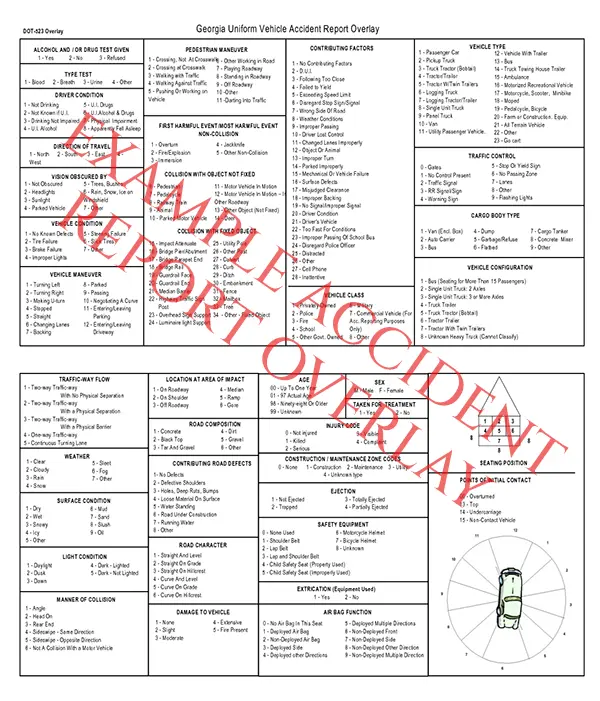
Common Georgia Police Report Abbreviations
Police reports often use abbreviations and codes to record information efficiently.
Common examples include:
- V1 – Vehicle 1
- V2 – Vehicle 2
- D1 – Driver 1
- D2 – Driver 2
- N – North
- S – South
- E – East
- W – West
- POV – Private Owned Vehicle
- EMS – Emergency Medical Services
- DOI – Damage Over Impact Area
If you are unsure what a specific abbreviation or code means, an experienced Georgia personal injury attorney can help explain the report and how it may affect your claim.
Does a Georgia Police Report Determine Fault?
Many accident victims believe that the police report automatically decides who is responsible for a crash. However, this is not always the case.
Although an officer may document observations, contributing factors, or issue traffic citations, the report itself does not legally determine fault. Insurance companies and courts review all available evidence before deciding liability.
Additional evidence may include:
- Accident scene photographs
- Surveillance footage
- Dash camera recordings
- Witness statements
- Vehicle damage assessments
- Medical records
- Accident reconstruction analysis
What If Your Police Report Contains Errors?
Police officers work quickly to document accident scenes, but mistakes can happen. Common errors may include:
- Incorrect names or addresses
- Incorrect insurance information
- Wrong vehicle descriptions
- Incorrect accident locations
- Missing witness information
If you notice inaccurate information in your report, you should address it as soon as possible. Depending on the circumstances, the investigating agency may be able to correct factual errors or add additional information.
If an error could negatively impact your injury claim, an attorney can help determine how to respond.
How a Police Report Can Affect Your Personal Injury Claim
Your Georgia accident report is often one of the first documents reviewed by insurance companies after a crash. A detailed report may help support your version of events and provide important evidence about what happened.
However, a police report is only one part of your case. Even if certain details appear incomplete or unfavorable, additional evidence may help clarify the circumstances of the accident.
At Hodgins & Kiber, LLC, we investigate beyond the police report to uncover evidence, establish liability, and pursue the compensation injured victims deserve.

Frequently Asked Questions
Can I challenge information in my Georgia police report?
Yes. If your report contains factual inaccuracies, you may be able to request corrections or provide additional information to the investigating agency.
Does receiving a traffic citation mean the other driver is automatically responsible?
No. A citation may be helpful evidence, but fault is determined by reviewing all available information related to the accident.
What if the officer’s description of the accident is incorrect?
An attorney can help gather additional evidence, speak with witnesses, obtain video footage, and investigate other factors that may support your claim.
Will the insurance company review my police report?
Yes. Insurance companies commonly review police reports when investigating accidents and evaluating injury claims.
Should I have an attorney review my accident report?
If you suffered injuries, significant property damage, or are facing challenges with an insurance company, having an attorney review your report can help protect your rights and identify important issues.
Let Hodgins & Kiber, LLC Help You Understand Your Accident Report
Understanding a Georgia police accident report can be challenging, especially while you are recovering from injuries and dealing with insurance companies. The information contained in the report may have a significant impact on your claim, making it important to understand exactly what it means.
At Hodgins & Kiber, LLC, we help injured Georgians review accident reports, investigate collisions, gather critical evidence, and pursue the compensation they deserve. If you have been injured in a car accident, contact our office today for a free consultation. Our team will explain your options, answer your questions, and help you take the next steps toward recovery.
